The Truth of the Tale
Imagine a kitchen where the refrigerator stands empty. The shelves are almost bare, with only a few scattered leftovers clinging to the corners. The only thing that truly catches the eye is a single strawberry in a bowl on the top shelf. Small, red, almost misplaced in its solitude.
For many of us, that image stirs immediate memories – of childhood summers, of years of rationing, or of times when food was scarce and every scrap had to be reused in creative ways. In the world of stories, a single strawberry can become the beginning of an entire narrative. A child might spin a game of imagination around it, declaring the fruit magical, capable of transforming into a full meal. And in that fantasy lies an important seed: the human impulse to explain scarcity by creating meaning.
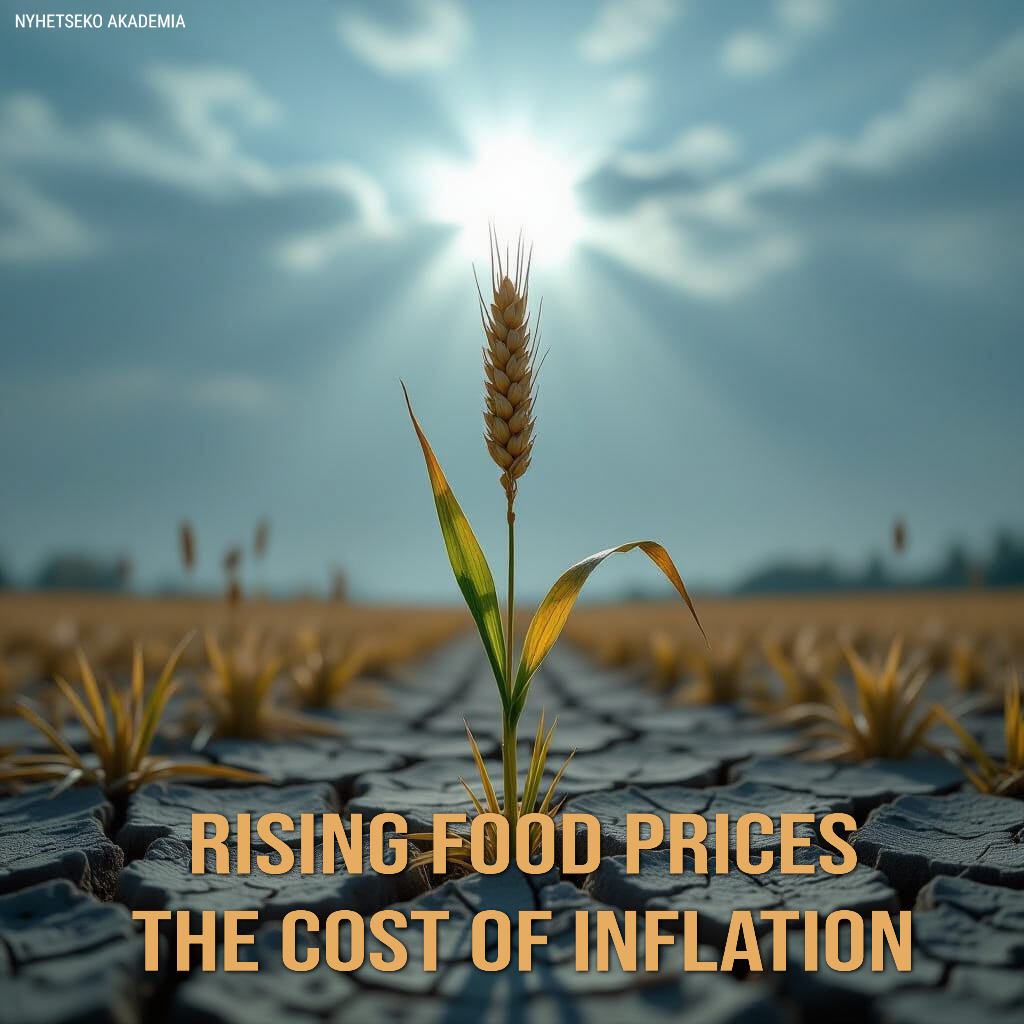
In our time, this is more than a story. It is a mirror. The gaze of the empty fridge meets us more and more often, even as headlines insist that inflation is falling and the economic crisis has eased. We are fed numbers, but the everyday experience does not match. Food feels more expensive, and suddenly the lone strawberry becomes a sign of something larger: the discrepancy between the reality of statistics and the reality of households.
When Numbers Don’t Match the Stomach
We have been taught that inflation is a measure of price levels in the economy. But that measure rests on a basket of goods and services, weighted and calculated according to statistical models. For many, it is self-evident that falling inflation means relief. Yet households often feel the opposite. Here a gap opens – not only economic, but psychological.
When we open the refrigerator, we do not care that clothes or electronics have become cheaper. We only see that bread, pasta, coffee, and fruit cost more. And even if the statistics tell us the overall measure is dropping, our daily reality is that what truly matters continues to rise.
This is where the image of the strawberry becomes valuable. It remains as a concrete fact – a price that must be paid. The figure on paper may fall, but the price tag on the shelf does not. This gap between abstract data and concrete experience explains why people often distrust economic reports and instead rely on their own gut feeling.
Why Use a Story?
Some ask: why mix stories and symbols into an economic discussion? The answer is that human experience is always interpreted through narrative. We seek meaning, coherence, and logic to explain what we see.
For a pensioner who remembers the rationing of wartime, today’s situation may not feel like news but like an echo. For a family with small children, the high grocery bill is a daily worry, not an abstract percentage. By using a simple image – like the strawberry in the empty fridge – we translate statistical complexity into human experience.
It is not about childish fantasy, but about finding a language to speak about the hardships of reality. Stories are often the most effective way into adult reflection, precisely because they strip away noise and reduce the issue to its core: What happens when we do not have enough?
A Collective Experience
In recent years, the gap between statistics and experience has become a political question. When headlines talk about falling inflation but households face higher food bills, mistrust grows toward both media and politicians.
It is easy to dismiss this as “feelings” or “faulty perceptions,” but in reality it is a systemic flaw. The construction of statistics, the concentration of the market, and currency movements explain why both perspectives can be true at once. Inflation may indeed be trending downward – but food may still be getting more expensive.
The empty fridge is therefore not just a private experience. It is a collective one. All households see the same pattern and are reminded of it every time they shop. That makes this not a marginal detail, but a central question of trust, politics, and the future.
From Metaphor to Analysis
Act I lays the foundation. We begin with an image – the strawberry as a lonely symbol in an empty fridge – and explain why that image matters. It opens two parallel lines of reasoning:
- That economic measures do not always match everyday life.
- That stories and symbols can make complex systems comprehensible.
This leads us to the next act: a deeper analysis of why food prices, unlike many other goods, do not follow the statistical logic. From there, we can trace further to market concentration, currency effects, and the asymmetry between rocket and feather.
The Shadows of the Economy
In economic statistics we often see headlines announcing that inflation is falling. In August 2025, CPI inflation was 1.1% and CPIF 3.2%. These are levels far below the peaks of 2022–23. Yet households still feel that the grocery bill is not getting cheaper. For many it even feels higher than ever.
This is no contradiction – but a consequence of how the system is built. To understand the difference we must examine three central factors: measurement methodology, market structure, and the role of currency.
1. Measurement methodology
Inflation is measured as an average across many goods and services. Statistics Sweden’s consumption basket includes everything from electronics and clothing to transport and food. If some goods fall in price, they can pull down the overall figure even if food rises.
That means the headline “inflation is falling” can be statistically correct – while households, whose largest recurring expense is food, experience the opposite. For someone standing at the grocery checkout, it does not matter that a new TV or smartphone is cheaper. It is the daily purchases that decide the budget.
2. Market structure
Sweden’s grocery trade is one of the most concentrated in Europe. According to the Competition Authority, five actors control almost the entire market. ICA accounts for around 50%, Axfood for just over 20%, and Coop for about 17.5%.
When a market is dominated by so few actors, it effectively becomes an oligopoly. Competition weakens, especially in smaller towns where consumers cannot opt out of the big chains. The result is that price levels can be maintained even when supplier costs fall.
This explains why food prices do not fall at the same pace as other goods when inflation declines.
3. Currency and import dependency
Sweden imports about half of its food. The National Board of Agriculture and the Federation of Swedish Farmers summarize it simply: “every second bite is Swedish.” That means we are highly sensitive to exchange rate movements.
When the krona weakens against the euro, as it has for several years, the cost of imported food rises. Analyses by the Riksbank also show that the pass-through effect of exchange rates on consumer prices has recently been unusually strong. This means that even if world market prices for, say, grain or dairy products fall, Swedish consumers may still face higher prices in stores.
4. Price asymmetry
A well-known phenomenon in research is that prices rise quickly when costs go up, but fall more slowly when costs go down. This is often called the “rocket–feather effect.” It applies not only to gasoline but also to food.
Consumers are always the last in the chain to notice relief. Even when producer or import prices fall, it can take a long time before it shows up on the store shelf.
5. The European picture
The Swedish pattern is not unique. In the euro area, food prices have risen about 34% since 2019, far above overall inflation. European households therefore share the same experience: even when total inflation normalizes, food continues to burden the economy heavily.
Two Truths at the Same Time
When these factors are summarized, it becomes clear why headlines can say “inflation falls” while households feel the opposite. Statistical averages show one thing. Market concentration, import dependency, and price asymmetry ensure that food remains expensive.
This is the shadow of the economy: places where the system speaks one language, but people’s daily lives speak another.
The Mirror Room of the Market
When we talk about food prices in Sweden, we must look at the market’s very structure. It is not an open arena with many players and free pricing. It is a system where a handful of companies have a firm grip on logistics, shelf space, and pricing.
The oligopoly in numbers
The Competition Authority has repeatedly shown that five actors account for almost 98% of the grocery market. The distribution looks like this:
- ICA: about 50%
- Axfood (Willys, Hemköp, etc.): just over 20%
- Coop: about 17.5%
- Lidl: just under 6%
- Bergendahls (Citygross, etc.): about 3%
When a single actor – ICA – controls half the market, a power imbalance arises. In practice, this means that price competition does not function as it would in a more fragmented market.
Effects for consumers
For consumers, this means three things:
- Slow price decreases – when producer or import costs fall, it takes time to show in stores.
- Geographic dependence – in many areas only one or two of the big chains are present, leaving consumers with no real choice.
- Strategic pricing – chains can use campaigns on single items to attract customers, while keeping other prices high. On the whole, the grocery bill does not fall.
Import dependency reinforces the effect
Sweden produces only about half the food it consumes. The rest is imported. This makes us dependent not only on our own actors but also on international suppliers and transport.
When the krona weakens against the euro, the effect is immediate. Even if global wheat prices fall, the price in Swedish stores may rise because of the exchange rate. This reinforces the oligopoly effect: the few actors who control the trade can also use currency fluctuations as justification for keeping prices high.
Rocket and feather in practice
A concrete example is dairy products. When energy prices rose in 2022, prices in stores increased quickly. When energy prices later fell, we did not see the same clear downward movement in milk and cheese. The rocket-up, feather-down effect was evident.
This mechanism works especially strongly in markets with few players. When everyone knows their competitors act the same way, there is no pressure to cut prices quickly.
The European context
Sweden is not alone. Eurostat shows that food prices in the EU have risen much more than overall inflation. In several countries the difference is even greater than here. But Sweden’s difference lies in its unusually concentrated market. In other countries there are more medium-sized chains that can drive competition. Here, in practice, three giants decide.
What Does This Mean for Households?
For households, this means limited freedom of choice. We can switch between ICA, Willys, or Coop – but that does not change the overall price level. We can choose discount brands or campaign items – but the total cost remains high.
This creates a feeling of confinement. Consumers cannot “vote with their feet” in the same way as in a more competitive market.
The Political Dimension
The issue is therefore not only economic, but also political. When such a fundamental sector as food is controlled by so few actors, pricing becomes almost a matter of infrastructure. Just like electricity, water, and transport, food prices affect all citizens, regardless of income or place of residence.
Letting five actors control 98% of the market means that the state has, in effect, delegated a central part of household economy to private interests.
Summary of the mirror room
The grocery market in Sweden is like a hall of mirrors: on the surface several chains appear, but behind the mirrors only a handful truly rule. The oligopoly, import dependency, and rocket–feather effect ensure that households are always the last to benefit from lower costs.
The result is a sense that “nothing changes” in the wallet, even while headlines say inflation is falling.
Conclusions and Ways Forward
After examining how inflation figures diverge from everyday life, how the oligopoly shapes prices, and how currency movements reinforce the effect, the remaining questions are: what does this mean for society, and what can be done?
Trust as the underlying issue
The first thing we must recognize is that this is not only an economic matter. It is also a matter of trust. When headlines speak of falling inflation but household food budgets remain tight, trust in both statistics and politics erodes.
This can have far-reaching consequences. Mistrust in institutions does not appear suddenly but is built through everyday experiences. If people repeatedly feel that their reality is not reflected in official narratives, the foundation of democratic dialogue weakens.
The political dimension
That food prices do not fall back is not only a market problem. It is also a political one. The state has effectively handed responsibility for food supply to a few private actors. When these actors control 98% of the market, it becomes a systemic flaw if they do not meet consumer needs.
For years, politics has emphasized free competition as the solution. But in a market with so few players, competition does not function in practice. The question, then, is whether food should be treated more like infrastructure than as a completely free market. Just like electricity, water, and transport, food policy may require stronger regulation or state involvement.
What Can Be Done? Three Paths Forward
- Strengthened transparency
Consumers must have clearer insight into why prices look the way they do. How much of the price of a liter of milk goes to the farmer, how much to transport, and how much to the chain? Open reporting of the price chain could reduce the room for unreasonable pricing. - Broader competition
There is a need to break up the Swedish oligopoly. This could mean making it easier for new actors to enter, supporting cooperative initiatives, or regulating entry barriers. Today shelf space, logistics, and marketing are so costly that it is nearly impossible for small actors to challenge the giants. - Reduced import dependency
With half of food imported, we are vulnerable. A long-term strategy must aim to increase the degree of self-sufficiency, especially for basic goods. This is both a matter of security and of reducing currency effects. Here, agricultural policy and food strategy have room to move beyond short-term crisis management.
The Household Perspective
For households, the short-term reality remains. Food prices are high, and even if overall inflation falls, it does not feel like relief in the wallet. This affects how people plan their lives, their shopping, and their outlook for the future.
Many adapt by switching brands, choosing discount stores, or reducing variety in their shopping cart. These are rational decisions, but they also mean that freedom of choice is gradually limited – people consume not what they want, but what they must.
The Broader Social Consequence
There is also a larger consequence: when households do not trust statistics or political statements, the risk grows that alternative explanations gain traction. Some blame particular groups, others global conspiracies. At the core it is the same mechanism: when official narratives do not match lived experience, people search for other stories.
Handling this is therefore not only about price levels, but about preserving a sense of shared reality where people feel they live in the same world.
Closing Words
Sweden faces a paradox. Inflation is falling, but food prices remain high. Statistics show improvement, but households feel continued pressure. The market is concentrated, import dependency is great, and currency effects are powerful. The result is a sense that the official story and everyday life no longer align.
This is where politics must dare to act. Food prices cannot be reduced to “the market knows best.” They are part of people’s fundamental security. If we accept that a few actors control almost the entire chain, we also accept that one of our most basic needs is governed by interests not always aligned with citizens’.
The question is therefore larger than individual prices. It concerns what kind of society we want to live in: one where statistics and daily life drift apart, or one where we try to restore trust through transparency, regulation, and long-term security of supply.
/Christine Djerf, Nyhetseko Akademia